History & Vision

History

The first years
The war years
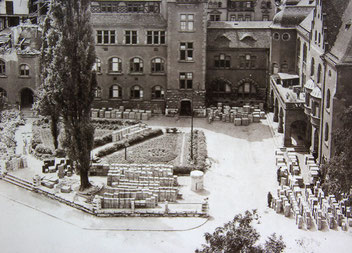
The museum's collection was moved to Jena's outer environs in 1941/42 to protect it during the Second World War. However, the poor storage conditions severely damaged the objects. After bringing the collection back to Jena at the end of the war, it was discovered that several crates had been opened during storage and various items were missing. Years of intense restorative work proved necessary. The museum was slated to be demolished by the Soviet occupation army – a fate that had befallen the Zeiss Factory in 1946. However, the museum's director successfully intervened and saved the institution.
The 1970s
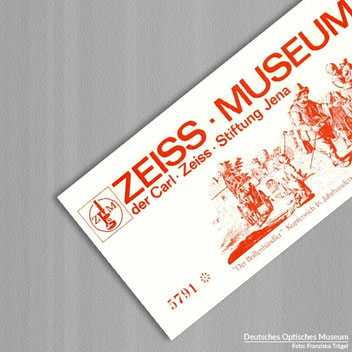
In August 1965, the first permanent exhibit opened to the public at the Griesbachhaus. As space was limited, the collection was moved to Carl-Zeiss-Platz 12 in 1976/77, and the exhibits reopened with a new name: "Tradition and Progress in the Manufacture of Optical Precision Instruments." Thanks to special exhibits held abroad in Florence, Paris, London, Edinburgh and Liverpool during the 1980s, the museum started to enjoy an international reputation.
100 years after Carl Zeiss
In honor of the 100th anniversary of Carl Zeiss' passing, the "Historic Zeiss Workshop" opened as part of the Optical Museum in December 1988. With the dedication of the workshop, the Optical Museum was renamed the Zeiss Museum. The new name was in effect until 1991.
Transfer to the Ernst-Abbe- Foundation
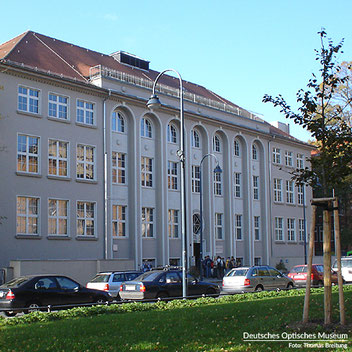
Since 1992, the Optical Museum has been under the auspices of the Ernst-Abbe- Foundation. In 1993, the exhibits were redesigned and given a modern look. In short succession, the "Visual Aids" exhibit was reopened along with the areas dedicated to ophthalmic instruments and the biography exhibitions of Ernst Abbe and Otto Schott. The permanent exhibits were completed in 1996 with the opening of "History of Microscopy and Telescopes," "Photography" and "World of Images."
Vision

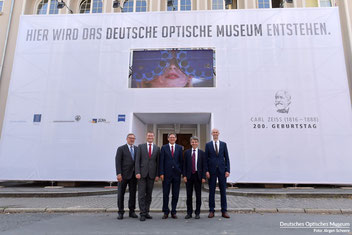
The Deutsches Optisches Museum is born